
3 min read
Fasting Before a Blood Test: What You Need to Know
Not every blood test requires fasting, but several common ones do — most notably fasting blood sugar and a full lipid (cholesterol) profile. Eating or drinking anything other than water beforehand can temporarily raise your blood sugar and fat levels, which can throw off the result.
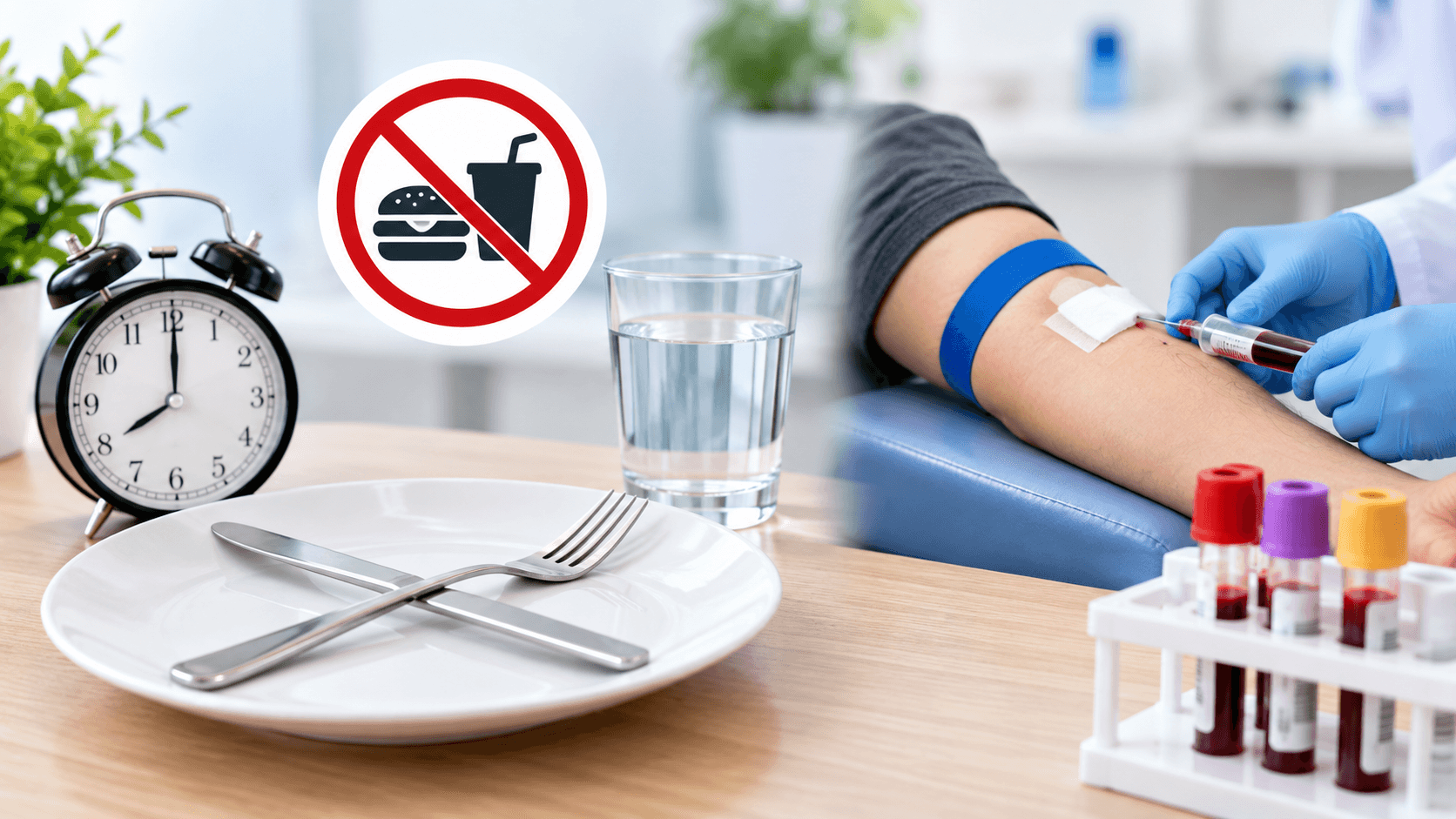
Fasting for a blood test typically means no food or drink (other than plain water) for 8 to 12 hours beforehand. Many people schedule these tests first thing in the morning so they can fast overnight and eat normally right after.
Water is generally fine to drink while fasting, and in fact staying hydrated makes it easier for the technician to draw blood. Unless your doctor has told you otherwise, you can usually continue taking your regular medications as prescribed.
If you're not sure whether your specific test requires fasting, it's always worth checking with the lab or your doctor beforehand — fasting unnecessarily is uncomfortable, and not fasting when it's required can mean having to repeat the test.
This article is for general information only. Always follow the specific instructions given by your doctor or the lab collecting your sample.
Ready to get tested?
Book a test or checkup at SR Metro — home sample collection available.